
Project preparation
Floating solar with storage: five questions before the project report
A practical floating-solar DPR guide for project owners: assess the water body, anchoring, battery duty, grid connection and financial assumptions together.
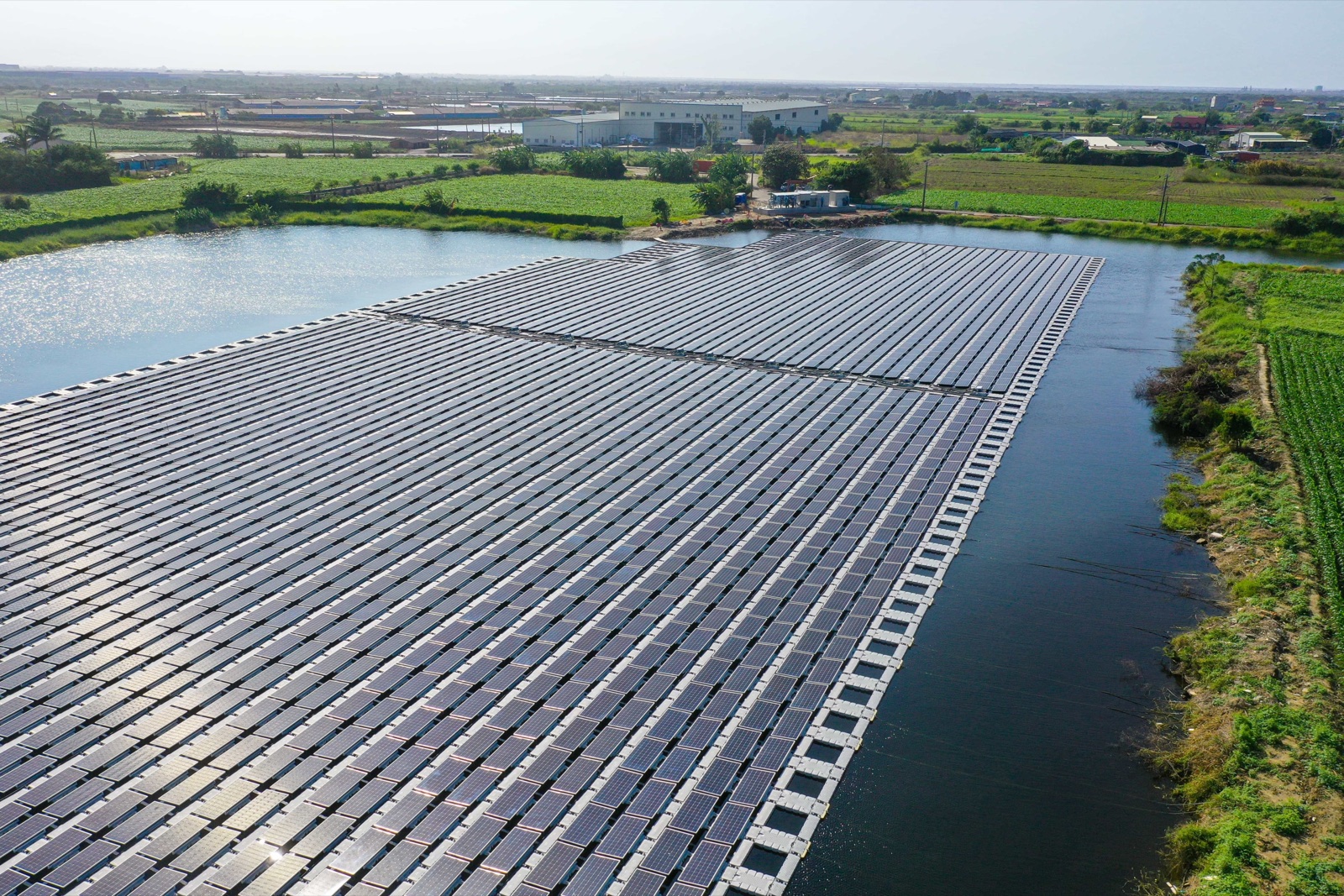
A promising water body is only the starting point
A reservoir may look suitable for solar. The project report still needs to explain how the plant will operate through changing water levels, how stored electricity will be delivered, and who carries the costs when assumptions change.
The Union Cabinet approved the Pradhan Mantri Surya Sarovar Yojana on 31 July 2026. The scheme envisages 5,000 MW of floating solar with co-located energy storage, with a total outlay of ₹5,070 crore. This is a development target, not installed or commissioned capacity. FY 2026–27 to FY 2030–31 is the project-sanction period, not a commissioning deadline; financial-support disbursements continue up to FY 2032–33. Read the Cabinet approval announcement.
This is an editorial project-preparation guide, not scheme eligibility or subsidy advice. Confirm current implementation guidelines and site-specific permissions before relying on assistance or approval in a financial model.
1. What changes across the year?
Look beyond the water surface visible on a site visit. Collect records of seasonal water levels and operating limits, wind and wave conditions, access arrangements and the existing uses of the water body. The survey and design teams should establish the evidence needed for that particular site.
The report should identify who controls the water body, what use rights have been secured and what remains subject to permission. Do not treat the absence of a land-purchase cost as evidence that access, rights or approvals are settled.
2. How will the plant stay in place?
Anchoring, mooring, electrical safety and maintenance access need deliberate engineering. The World Bank’s floating-solar handbook identifies these as important technical considerations.
Ask the designer to document the site conditions behind the proposed arrangement and the boundaries between float, mooring, electrical and shore-side works. Make inspection, repair access and emergency response responsibilities clear. The DPR should connect this design basis to the EPC scope and operating-cost assumptions.
3. What exactly must the battery deliver?
Start with the duty, not just a battery size. Which hours must the project supply? At what delivery point and power level? How will charging, losses, operating limits and availability be represented?
Keep power in MW distinct from energy in MWh. State whether the quoted energy is nominal capacity or usable energy at a defined point. Record degradation, augmentation or replacement assumptions and their cost basis, rather than assuming that the starting performance lasts unchanged.
Solar generation, battery dispatch and billed electricity should reconcile in the same model. Storage does not create additional solar energy; the model needs a clear charging source and loss treatment.
4. Where will the electricity go?
Identify the buyer or intended consumer, proposed connection point and evacuation scope. Record the status of the power-purchase or consumption arrangement and the relevant connection correspondence.
Separate signed terms from proposals. Who builds the evacuation works? Who pays for them? Which permissions or milestones could delay energisation? The commissioning schedule should reflect those dependencies, not just equipment delivery dates.
5. What happens when assumptions change?
A single base case cannot show the full funding requirement. Test plausible changes with the technical and finance teams and trace them through the schedule and cash flows.
- Lower energy delivery: check revenue and period-by-period repayment coverage.
- Delayed commissioning: move the revenue start date and examine construction-period costs.
- Higher capital or operating costs: identify the additional funding need and its proposed source.
- Changed battery performance: revisit delivered energy and replacement or augmentation spending.
These are assessment questions, not forecasts or recommended return thresholds. A financial model should expose uncertainty, not hide it inside an optimistic generation or cost assumption.
What to collect before preparing the DPR
| Workstream | Useful starting evidence |
|---|---|
| Site and rights | Water-body use rights, operating restrictions, surveys, water-level records and access evidence. |
| Engineering | Design basis, float and mooring arrangement, electrical scope, battery operating requirements and maintenance plan. |
| Commercial and grid | Buyer or consumption records, agreement status, connection correspondence and evacuation responsibilities. |
| Costs and delivery | Dated quotations, scope exclusions, procurement milestones and commissioning dependencies. |
| Funding and risk | Funding assumptions, repayment schedule, sensitivities and a register of unresolved evidence. |
Use a simple evidence register: document, source date, responsible person and pending action. A useful report brings engineering, execution and commercial assumptions together so they tell the same story.
Sources and next steps
Policy context was checked against the PIB Cabinet approval announcement dated 31 July 2026. For technical background, see the World Bank’s Where Sun Meets Water practitioner handbook. The five-question structure and preparation checklist are Bitcon editorial guidance, not prescribed scheme requirements.
For the wider report structure, read our solar power plant DPR guide. Its worked example is fictional and is not a floating-solar cost benchmark.
Evaluating a floating-solar project? Discuss the site, proposed capacity and current development stage with Bitcon to define the assessment scope and required inputs. A report does not guarantee financing or approval.